
South Redondo dental group | Redondo beach, CA
Same-Day Dental Crowns in Redondo Beach: How CAD/CAM Restores Your Smile in One Visit
When a tooth is cracked, weakened or badly decayed, waiting several weeks for a permanent restoration can be inconvenient. Traditional crown treatment often requires multiple appointments, a temporary crown and an outside dental laboratory.
Fortunately, advances in digital dentistry have made the process faster and more comfortable. At South Redondo Dental Group, CAD/CAM technology allows many patients to receive a custom ceramic dental crown in a single visit.
Here is how same-day dental crowns work and how to determine whether one may be right for your smile.
What Is a Dental Crown?
A dental crown is a tooth-shaped restoration that covers the visible portion of a damaged or weakened tooth. It can restore the tooth’s strength, shape, appearance and ability to function comfortably.
According to the American Dental Association, a crown may be recommended to strengthen a weak tooth, restore a broken tooth, cover a tooth with a large filling or complete a dental implant.
At South Redondo Dental Group, a crown may be considered when a tooth has:
- A large cavity that cannot be predictably repaired with a filling
- A crack, fracture or significant structural damage
- Extensive wear caused by grinding or an uneven bite
- A large existing filling with little natural tooth structure remaining
- Undergone root canal treatment
- An unusual shape, size or appearance
- Been replaced with a dental implant
The goal is not simply to cover the tooth. A well-designed crown should protect it, restore comfortable chewing and blend naturally with the rest of your smile.
What Does CAD/CAM Mean?
CAD/CAM stands for Computer-Aided Design and Computer-Aided Manufacturing. It is a digital system used to scan, design and fabricate dental restorations with a high degree of precision.
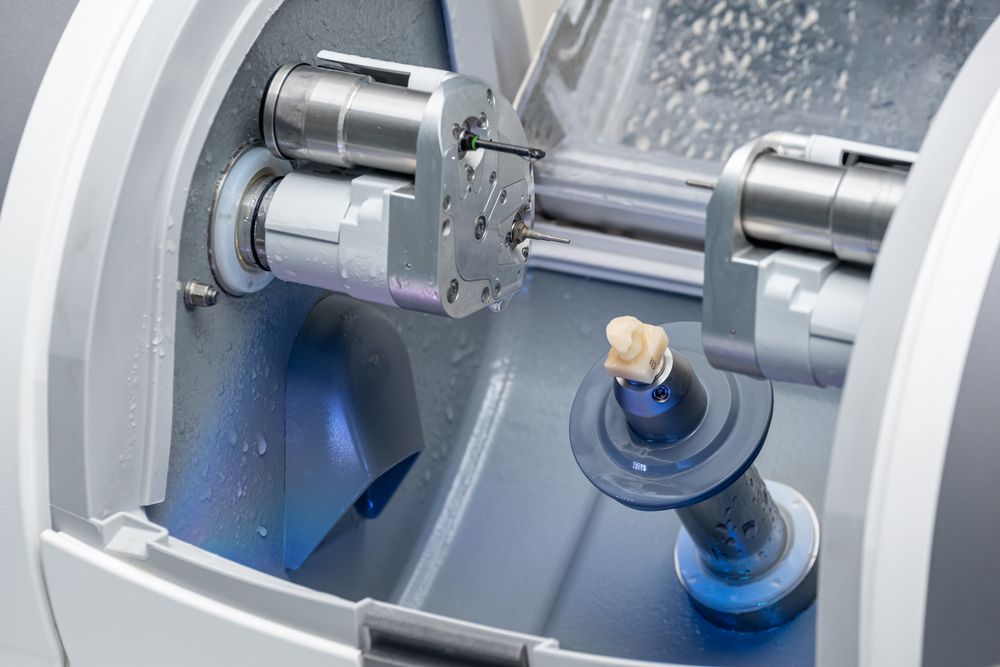
South Redondo Dental Group uses CAD/CAM dentistry to create crowns and other ceramic restorations more efficiently. Instead of taking a conventional putty impression and sending it to an outside laboratory, the dental team can capture a digital scan, design the restoration and mill it in the office.
For qualifying cases, this makes it possible to complete the entire crown procedure during one appointment.
How Is a Same-Day Crown Made?
Although the technology is sophisticated, the patient experience is straightforward.
1. Examination and Digital Imaging
The process begins with an examination of the affected tooth. Digital X-rays or other images may be used to evaluate the tooth, its root and the surrounding bone.
Dr. Gregory Shvartsman will determine whether a crown is appropriate or whether another treatment, such as a filling, inlay, onlay or root canal, is needed first.
2. Preparing the Tooth
The area is numbed to keep you comfortable. Damaged or decayed portions of the tooth are removed, and the remaining structure is carefully shaped to make room for the crown.
How much preparation is required depends on the condition of the tooth and the type of restoration being created.
3. Capturing a Digital Impression
Instead of placing a tray filled with impression material in your mouth, the team uses an intraoral scanner to capture detailed images of your teeth and bite.
Those images are combined to create a three-dimensional digital model. This model records the size and shape of the prepared tooth, the neighboring teeth and the way the upper and lower teeth come together.
Digital scanning can make the process more comfortable for patients who dislike conventional impressions or have a sensitive gag reflex.
4. Designing Your Crown
Specialized software is used to design the crown on a computer. The dentist can adjust its contours, contact points and chewing surface while viewing the restoration from multiple angles.
This digital design is customized to your mouth. It is not a prefabricated cap selected from a standard set of sizes.
5. Milling the Ceramic Restoration
Once the design is complete, it is sent to an in-office milling unit. The crown is carved from a block of dental ceramic selected to complement the color of your natural teeth.
The milling process generally takes place while you remain in the office. Depending on the restoration, additional finishing, staining, polishing or firing may be performed to refine its appearance.
6. Checking the Fit and Bite
The crown is placed on the tooth so the dentist can evaluate its fit, shape, color and relationship with your bite.
Small adjustments can be made before the restoration is bonded. Once everything looks and feels right, the crown is securely attached and polished.
You leave the appointment with your permanent restoration already in place.
Same-Day Crowns vs. Traditional Crowns
A traditional dental crown normally involves two principal appointments.
During the first visit, the tooth is prepared, an impression is taken and a temporary crown is placed. A dental laboratory then fabricates the permanent restoration. The patient returns several weeks later so the temporary can be removed and the final crown attached.
With a CAD/CAM crown, scanning, designing, milling and placement can often be completed during one visit.
This approach may eliminate:
- A separate crown-placement appointment
- A temporary crown
- Conventional putty impressions
- Several weeks of waiting for the final restoration
- The possibility of a temporary crown becoming loose or breaking
The treatment still requires careful diagnosis, design and bite adjustment. Completing a crown in one visit does not mean skipping the steps that make the restoration precise and functional.
Benefits of Same-Day Dental Crowns
Fewer Appointments
Completing treatment in a single visit can be especially helpful for patients balancing work, school, childcare or a busy South Bay commute.
No Temporary Crown
Temporary crowns serve an important purpose during conventional treatment, but they are not as strong or precisely fitted as permanent restorations. Some patients also need to avoid certain foods while wearing them.
A same-day crown can remove this temporary stage entirely.
More Comfortable Impressions
Digital scanning avoids trays of impression material. It also allows the dental team to review the scan immediately and recapture a small area if additional detail is needed.
Customized Digital Design
CAD/CAM software helps the dentist design the crown around your natural tooth anatomy, neighboring teeth and bite.
Natural-Looking Ceramic
Modern dental ceramics can provide lifelike color and translucency. This makes them suitable for restoring many visible teeth as well as teeth used for chewing.
Immediate Protection
A cracked or weakened tooth remains vulnerable until it is permanently restored. Placing the final crown during the same visit provides immediate coverage and protection.
Is Every Crown a Same-Day Crown?
Not every patient or restoration is suitable for same-day treatment.
A laboratory-made crown or another treatment approach may be recommended when a case requires:
- Highly customized cosmetic layering
- A specialized restorative material
- Treatment of significant decay or gum disease first
- A multi-unit bridge or particularly complex restoration
- Additional management of the bite
- A specialized implant restoration
- Coordination with another dental specialist
The best option depends on the location of the tooth, the amount of healthy structure remaining, the forces placed on the tooth and the desired cosmetic result.
South Redondo Dental Group evaluates each case individually rather than assuming every damaged tooth should receive the same restoration.
Does Faster Treatment Mean Lower Quality?
Not when CAD/CAM dentistry is used appropriately.
The crown is produced faster because the digital design and manufacturing steps happen inside the dental office. The process does not require the impression and restoration to be transported between the dentist and an outside laboratory.
Long-term success still depends on several factors:
- An accurate diagnosis
- Careful tooth preparation
- Appropriate material selection
- Precise digital scanning
- Proper crown design
- Accurate bite adjustment
- Strong home care and regular dental visits
Technology improves efficiency, but the dentist’s planning and clinical judgment remain essential.
Caring for Your New Crown
A ceramic crown does not require complicated maintenance. It should be brushed and flossed like a natural tooth, with special attention to the area where the crown meets the gumline.
To protect the restoration:
- Wait until numbness has resolved before chewing
- Brush twice daily with fluoride toothpaste
- Floss around the crown every day
- Avoid chewing ice, pens and other hard objects
- Wear a nightguard if you grind or clench your teeth
- Attend regular examinations and professional cleanings
- Contact the office if your bite feels unusually high
Some temporary sensitivity may occur after the procedure. Persistent pain, swelling or discomfort when biting should be evaluated.
Paying for a Dental Crown
Dental insurance may cover part of the cost of a crown when it is considered medically necessary, although deductibles, waiting periods and coverage percentages vary.
South Redondo Dental Group is a PPO provider for many insurance companies and can help patients understand their available benefits. The practice also accepts major payment methods and offers financing through CareCredit and LendingClub. Additional information is available on the new patient and financial information page.
Restore Your Tooth in One Convenient Visit
A damaged tooth should not be ignored. Cracks and decay can become more extensive over time, potentially leading to pain, infection or the loss of otherwise treatable tooth structure.
With chairside CAD/CAM technology, South Redondo Dental Group can restore many teeth with custom ceramic crowns in a single appointment.
To find out whether you qualify for a same-day dental crown, call (310) 792-8610 or visit the office at 1711 Vía El Prado, Suite 400B, Redondo Beach, CA 90277.
Frequently Asked Questions
How long does a same-day crown appointment take?
The exact length depends on the tooth and complexity of the restoration. The visit includes preparing the tooth, completing a digital scan, designing and milling the crown, checking the bite and bonding the restoration.
Will I need a temporary crown?
In most cases completed entirely with chairside CAD/CAM technology, no temporary crown is needed. If a restoration must be produced by an outside laboratory, a temporary may still be necessary.
Are same-day crowns made from porcelain?
Same-day restorations are typically created from high-quality dental ceramic. The specific material is selected based on the location of the tooth, appearance and functional demands.
Do same-day crowns look natural?
Yes. The ceramic can be selected and finished to complement the surrounding teeth. The final appearance also depends on the tooth’s location, underlying color and complexity of the case.
Can CAD/CAM be used for restorations other than crowns?
Yes. Depending on the case, CAD/CAM technology can be used to create inlays, onlays, veneers and certain implant restorations.
How long will a ceramic crown last?
A crown can function for many years, but its lifespan depends on oral hygiene, bite forces, diet, grinding habits and regular dental care. The natural tooth beneath the crown can still develop decay, so brushing, flossing and preventive visits remain important.
Explore Our Blogs

Invisalign vs. ClearCorrect: Which Clear Aligner Is Right for You?
Same-Day Dental Crowns in Redondo Beach: How CAD/CAM Restores Your Smile in One Visit
Same-Day Dentistry in Redondo Beach: Get Your Crown in a Single Visit
The Complete Guide to Cosmetic Dentistry in Redondo Beach & the South Bay
What Makes South Redondo Dental Group Different From Other Redondo Beach Dentists?




Dental Implants at South Redondo Dental Group: A Permanent Solution for Missing Teeth